
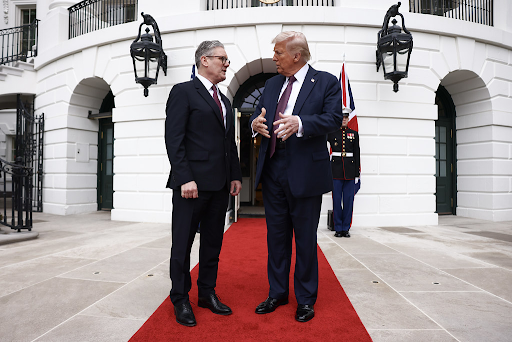
A distinct chill settled over the “special relationship” as President Donald Trump and Prime Minister Keir Starmer engaged in a public feud over Palestine policy. Trump’s blunt rejection of the UK’s plan for unilateral recognition, voiced on British soil, has highlighted a significant and growing divergence between the two nations.
The U.S. President was resolute in defending the American “negotiations-first” model. This model insists that Palestinian statehood must be the end result of a comprehensive peace treaty, not a starting point for talks. The U.S. recently demonstrated its commitment to this model by standing against the global tide in a UN vote on the two-state solution.
Prime Minister Starmer, while maintaining diplomatic decorum, stood firm on his government’s new strategy. He described the planned recognition not as a final act, but as a “necessary catalyst” to foster a more equitable and urgent peace process. This represents a significant break from the previous UK policy, which was more closely aligned with Washington’s.
This public feud brings a core debate in international diplomacy to the forefront. Is it more effective to withhold the ultimate prize to incentivize a deal, or to grant it in order to change the dynamics of the negotiation? The U.S. and the UK now find themselves on opposite sides of this question.
The formal state visit, ironically, became the stage for this display of disunity. While a temporary truce was achieved by delaying the UK’s policy, the underlying disagreement is now a public and defining feature of the relationship, signaling a more independent and unpredictable foreign policy from London.