
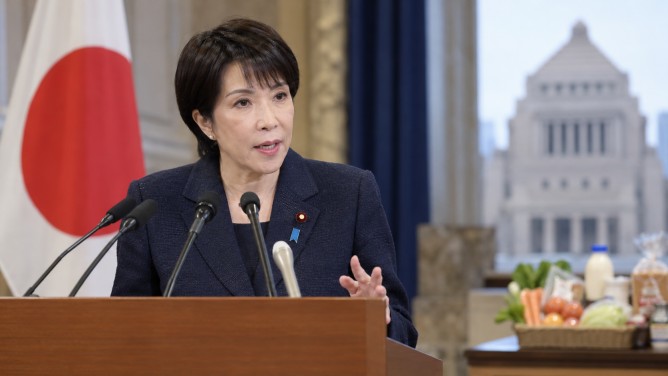
In a recent parliamentary session, Japanese Prime Minister Sanae Takaichi announced that her government would not extend the two-year reduction in the consumption tax on food and beverages, a measure set to conclude in March 2029. Takaichi emphasized the importance of maintaining fiscal sustainability and public confidence in Japan’s public finances as key reasons for this decision.
During the deliberations over the proposed tax legislation, Takaichi highlighted the vital role that revenue from the consumption tax plays in funding social security programs. The temporary tax cut is part of a broader legislative package that includes financial assistance aimed at supporting low- and middle-income households, which the government is seeking to pass during the current extraordinary session of parliament.
Takaichi assured that the government is committed to covering any shortfall from the tax reduction without issuing additional deficit-financing bonds, although specific details on how this would be achieved have not been fully disclosed. This aspect of the proposal has attracted criticism, with concerns about the potential fiscal impact and how the government plans to compensate for the reduction in tax revenue.
Opposition parties have expressed concern that restoring the tax rate after the temporary cut could impose a heavier financial burden on households already struggling with high living costs. The debate underscores the ongoing challenge for Japan’s government to balance providing immediate relief to consumers while ensuring the long-term stability of public finances and sustainable funding for social security.
Prime Minister Takaichi underscored the necessity of fiscal preparedness for unforeseen events such as natural disasters and infectious disease outbreaks, stressing that stable public finances are crucial for effective government response to such emergencies. The administration’s stance reflects a focus on long-term financial health over short-term fiscal measures.