
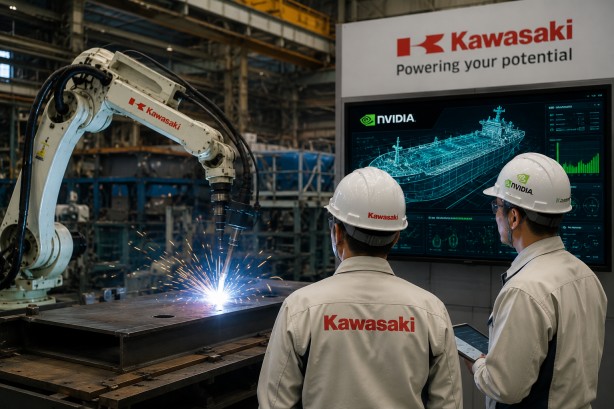
Nvidia has teamed up with Japan’s Kawasaki Heavy Industries to create AI-enhanced robots specifically for shipbuilding, marking a significant move towards modernizing the sector with cutting-edge automation and digital technologies. These robots are being engineered to tackle essential shipyard tasks, including welding, painting, inspection, and handling materials. The partnership aims to revolutionize the concept of shipyards by integrating physical artificial intelligence with digital twin technology, fostering a new era of digital shipbuilding.
This collaboration comes at a crucial time for Japan, a nation grappling with a severe labor shortage exacerbated by an aging population and a decrease in skilled workers. By introducing AI-driven automation, the initiative not only seeks to mitigate this labor scarcity but also aims to boost productivity within shipyards. Furthermore, it aligns with global efforts to construct vessels that are low- or zero-carbon, addressing pressing environmental concerns while enhancing operational efficiency.
During a recent visit to Tokyo, Nvidia’s CEO Jensen Huang highlighted the significance of historical support from industry partners in Nvidia’s journey. He specifically mentioned Sega, recalling how their $5 million investment in the 1990s played a pivotal role in enabling Nvidia to navigate its formative years. This acknowledgment underscores the importance of strategic alliances in fostering innovation and sustaining growth in the technology sector.
As Nvidia and Kawasaki Heavy Industries embark on this ambitious project, the endeavor represents a blend of advanced AI capabilities and traditional industrial expertise. By leveraging Nvidia’s prowess in AI technologies and Kawasaki’s extensive experience in heavy machinery, the partnership aims to set a benchmark for future digital shipyards. The use of digital twin technology, which creates a virtual replica of physical assets, further enhances the ability to streamline processes and optimize performance in shipbuilding.
Ultimately, this collaboration is a testament to the transformative potential of AI in traditional industries, offering a glimpse into how technology can address contemporary challenges while paving the way for sustainable and efficient industrial practices. As the project unfolds, it promises to reshape the shipbuilding landscape, setting new standards for innovation and productivity in the maritime domain.