
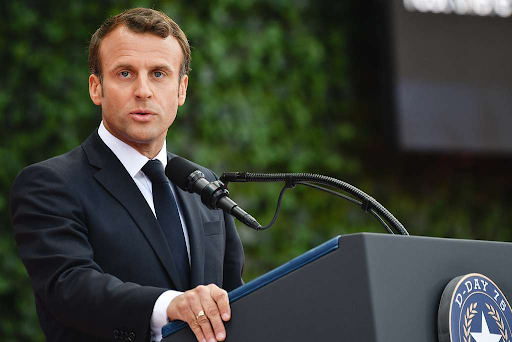
The optics of international summits can be misleading. On the surface, the AI Impact Summit in Delhi looked like another gathering of competing interests — American tech giants, European regulators, Indian ambitions and multilateral institutions, each with a different agenda. Look closer, and a more interesting picture emerged: a genuine if imperfect alignment between Emmanuel Macron, António Guterres and Narendra Modi on some of the most important questions about AI governance, centred on child safety and the need to prevent dangerous concentrations of power.
The alignment was not manufactured for the cameras. Modi’s call for child-safe, family-guided AI development and his warning against AI monopolies echoed Macron’s demand for enforceable child safety standards and his defence of European regulation as a bulwark against unchecked commercial power. Guterres’ insistence that AI must be governed for the benefit of all, not just the wealthy few, reinforced both. Their convergence was real, if bounded by their respective national and institutional interests.
For Macron, the alliance is strategically useful. France’s G7 presidency has more leverage when it can demonstrate that its agenda resonates beyond Europe. An alliance that includes the UN secretary general and the leader of the world’s most populous democracy is not a European position — it is an emerging global consensus. Macron has understood that the argument for child safety in the AI era is stronger when it is made by multiple voices from multiple traditions.
The specific content of the alliance centres on three areas where their positions align. First, child safety: all three leaders agreed that AI that harms children is unacceptable and must be governed accordingly. Second, governance structures: all three called for some form of international coordination, whether through the G7, the UN or new institutional mechanisms. Third, concentration of power: all three warned against a world in which the most consequential technology is controlled by a handful of companies or countries accountable to no one but themselves.
This unlikely alliance will be tested in the months ahead, as France’s G7 presidency moves from rhetoric to agenda-setting and the international community is asked to translate political alignment into policy commitments. The obstacles are formidable — American resistance, industry lobbying, the inherent difficulty of international coordination. But Macron leaves Delhi having demonstrated that the coalition for meaningful AI governance is broader and more robust than its critics have claimed.