
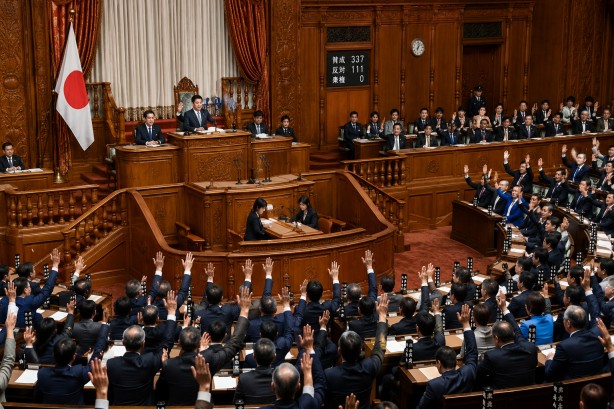
In a significant legislative move, Japan’s Lower House has approved a bill to amend the Imperial House Law, addressing concerns about the diminishing size of the imperial family. This decision follows the last-minute backing from the Centrist Reform Alliance, vital for the bill’s passage. The legislation seeks to allow female imperial family members to maintain their royal status upon marriage and to enable male-line descendants from former imperial branches to rejoin the imperial family through adoption. A controversial aspect of the bill is the provision that would permit sons born to these adoptees to be eligible for the throne, sparking considerable political debate.
The ruling Liberal Democratic Party has defended the proposed reforms as essential to preserving Japan’s historical tradition of male-line succession. This argument arises in response to the current imperial family’s limited number of heirs. The party emphasizes the necessity of these changes to ensure the continuity and stability of the imperial lineage, reflecting on the cultural significance of maintaining traditional succession practices.
Despite securing approval in the Lower House with backing from multiple parties, the bill now faces a challenging path in the Upper House. Here, it is expected to undergo intense scrutiny. Opposition lawmakers have signaled their intent to propose amendments, particularly targeting the bill’s provisions related to adoption. This indicates a looming debate over the balance between modernizing the imperial family structure and adhering to age-old traditions.
The legislative process’s next phase could be pivotal, as lawmakers navigate the complexities of tradition and modernity within the framework of the Imperial House Law. The outcome may have lasting implications for the future composition and functioning of Japan’s imperial family, reflecting broader societal discussions on gender roles and lineage.