
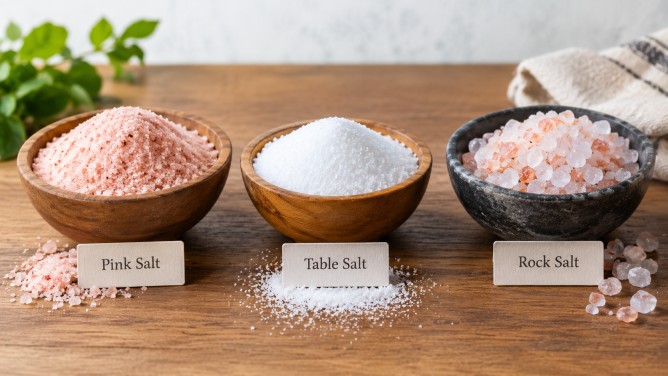
When selecting salt for cooking, understanding its iodine content is crucial for maintaining thyroid health. Different types of salt, including iodised table salt, pink Himalayan salt, and rock salt, offer varying levels of iodine, a mineral essential for the thyroid gland’s hormone production. These hormones, thyroxine (T4) and triiodothyronine (T3), play vital roles in regulating metabolism, body temperature, and growth.
Iodine is particularly important during pregnancy and childhood for healthy brain development and growth. Since the body cannot produce iodine, it must be sourced from food, with iodised salt being a cost-effective method to prevent deficiency. Iodised table salt, when properly labelled, provides a consistent source of iodine, making it a reliable choice for everyday use. However, it’s important to use it in moderation to avoid excessive sodium intake, which can lead to high blood pressure.
Pink Himalayan salt is often chosen for its unique color and perceived natural benefits, but it is not a dependable source of iodine unless specifically fortified. The trace minerals that give it its pink hue do not significantly contribute to iodine intake. Consumers who prefer its taste or texture should ensure their diet includes other iodine sources.
Similarly, rock salt, a staple in traditional Indian cooking, may not provide adequate iodine unless fortified. Its mineral content varies by source, and relying solely on non-iodised rock salt can lead to insufficient iodine intake, especially if the diet lacks other iodine-rich foods.
For adults, the recommended daily iodine intake is about 150 micrograms, with increased needs during pregnancy and breastfeeding. Besides iodised salt, iodine can be obtained from milk, yogurt, eggs, seafood, and fortified foods. Those on vegetarian or vegan diets should be mindful of their iodine sources, and consulting a healthcare professional can be beneficial to ensure adequate intake.
Choosing salt wisely involves checking for an iodised label and storing it properly to maintain its quality. While iodised salt helps prevent iodine deficiency, it should not justify increased overall salt consumption. A balanced diet and careful selection of salt varieties can support thyroid health and overall wellbeing.