
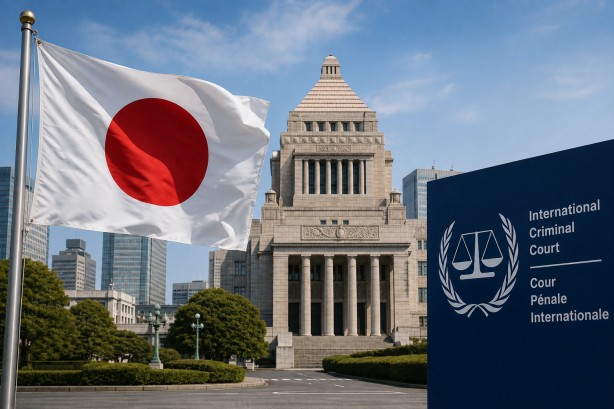
Japan has carefully navigated its response to the United States’ imposition of sanctions on Tomoko Akane, the president of the International Criminal Court (ICC), steering clear of directly criticizing the Trump administration. Prime Minister Sanae Takaichi labeled the sanctions as “very unfortunate” and emphasized Japan’s intention to maintain ongoing discussions with the U.S. and other involved nations. Japanese officials have underscored the importance of ensuring that these developments do not adversely affect their crucial alliance with the U.S., Japan’s only treaty ally.
As the largest financial backer of the ICC, Japan has also contributed significantly in terms of personnel. Tomoko Akane, a former prosecutor from Japan, was appointed as an ICC judge in 2018 and ascended to the role of president in 2024, marking a historic first for a Japanese individual. Meanwhile, the United States has increasingly distanced itself from the ICC under President Donald Trump’s administration, which authorized sanctions against the court’s personnel in February 2025. U.S. Secretary of State Marco Rubio has stated Washington’s aim to undermine the ICC and encourage allies to resist its influence.
Japan has previously refrained from joining an international statement that condemned the U.S. sanctions, citing the delicate nature of its relationship with Washington as a reason for its cautious stance. This decision drew criticism from Akane, who called on Japan to adopt a firmer position in defending the ICC and upholding the rule of law. Despite its measured public response, Japan has consistently voiced support for both the ICC and Akane’s leadership.
Prime Minister Takaichi reaffirmed Japan’s commitment to the ICC during a meeting with Akane in January, where they discussed the court’s essential role. The Japanese government’s ongoing support for the ICC highlights a careful balancing act, as it seeks to navigate its diplomatic ties with the United States while maintaining its dedication to international justice and the rule of law.