
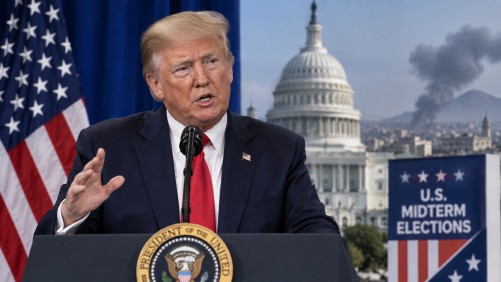
In the lead-up to the US midterm elections, President Donald Trump has expressed confidence that the ongoing conflict between the United States and Iran will conclude shortly after the votes are cast in November. Trump has suggested that once this conflict ends, there will be a significant decrease in oil prices, which have been volatile due to the tensions.
While addressing the media in Dublin, Trump accused Iran of trying to prolong the dispute to sway the American electoral process. However, he remains optimistic that an end is in sight following the midterms, with a subsequent drop in oil prices being a potential outcome. The energy market has been notably affected by the conflict, especially with tensions lingering around the strategically crucial Strait of Hormuz, leading to oil prices exceeding $100 per barrel.
On the other side of the conflict, Iranian President Masoud Pezeshkian, speaking at the BRICS Summit in New Delhi, reiterated Iran’s stance against war and its preference for peace. Pezeshkian emphasized the importance of regional security being maintained by neighboring countries rather than relying on intervention from the United States, underlining Iran’s commitment to peaceful resolutions.
The conflict’s prolonged nature has caused a significant impact on global energy supplies and raised questions about the stability of regional security. Although there have been attempts to negotiate a settlement, these efforts have not yet resulted in any substantial progress. The ongoing skirmishes, albeit reduced in intensity, continue to contribute to the climate of uncertainty.
As global observers watch closely, the stability of the region and the future of energy supplies remain in the balance, hinging on the outcomes of diplomatic efforts and the political shifts that may follow the US midterm elections. The international community remains on alert, anticipating the potential changes that might bring an end to the conflict and restore stability to the oil markets.