
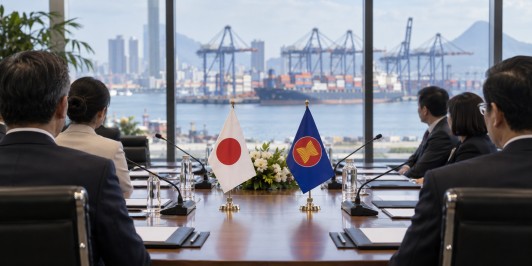
In an era marked by global supply chain disruptions and accelerating technological advancements, Japan and the Association of Southeast Asian Nations (ASEAN) are taking proactive steps to strengthen their economic ties. At a recent meeting in Manila on September 20, economic ministers from both regions agreed to explore an expansion of their existing economic partnership agreement. The focus of this initiative will be on enhancing supply-chain resilience, energy security, and the integration of artificial intelligence (AI) into their economies.
The decision comes amid growing concerns over the stability of global supply chains and the impact of geopolitical tensions on trade. Japan and ASEAN are seeking to update their agreement to better address these challenges, emphasizing the need for robust cooperation in maintaining steady energy supplies. This is particularly crucial given the potential for disruptions to key trade routes in the Middle East, which could impact the availability of energy resources.
Japan has reiterated its commitment to bolstering energy security in the ASEAN region, notably through the strengthening of oil stockpiles. This move is part of a broader strategy to ensure that ASEAN countries have access to stable energy resources, which is vital for economic stability and growth. The ministers at the meeting underscored the importance of such collaborations, especially in light of the uncertainties currently facing global trade.
The economic partnership agreement between Japan and ASEAN, first enacted in 2008, has evolved over the years to include trade in services and investment. As of 2025, the two regions reported $245.4 billion in two-way merchandise trade, with Japanese investments in ASEAN reaching $9.5 billion. This expansion reflects the deepening economic interdependence between Japan and ASEAN, driven by mutual interests in fostering a resilient and innovative economic environment.
As Japan and ASEAN look to the future, the emphasis on AI is particularly significant. By integrating AI advancements, both regions aim to enhance productivity and drive economic growth. This focus aligns with global trends towards digital transformation, underscoring the need for forward-thinking strategies in economic partnerships. As discussions progress, the potential expansion of the agreement could serve as a model for other regions grappling with similar challenges.