
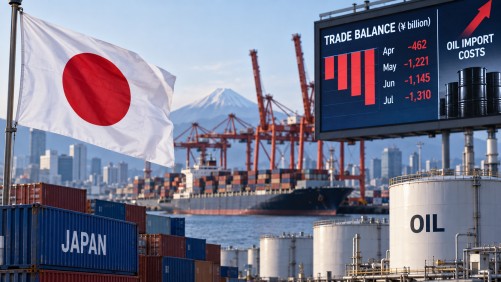
Japan continues to face economic challenges as it grapples with a persistent trade deficit, exacerbated by volatile global oil markets. The nation recorded a trade shortfall of approximately 1.1 trillion yen ($7 billion) in August, marking the fourth consecutive month of deficits. This ongoing trend is largely attributed to rising import costs driven by higher oil prices, which have been affected by ongoing conflicts in the Middle East.
According to preliminary data from Japan’s Finance Ministry, imports surged by 28% compared to the previous year, reaching 11.15 trillion yen ($71.9 billion). The increase in import costs is primarily due to the heightened energy prices amid disruptions around the Strait of Hormuz, a crucial chokepoint for global oil supplies. As a nation heavily reliant on imported energy, Japan is particularly vulnerable to such fluctuations in the oil market.
Despite the rising import bills, Japan’s export sector showed resilience with a 19.3% year-on-year increase, amounting to 10 trillion yen ($64.5 billion). This growth was largely supported by robust shipments of automobiles and computer chips, which continue to be significant contributors to Japan’s export economy.
Trade dynamics with major partners showed notable changes. Exports to the United States increased by 24.9%, while imports from the U.S. surged by an even more significant 55.2%. Meanwhile, exports to Europe rose by 11%, and imports from the region grew by 20.4%, reflecting a strong bilateral trade relationship.
However, Japan’s trade with the Middle East experienced a downturn, with exports declining by 5.2% and imports decreasing by 4.2%. This reduction reflects the ongoing instability in the region, which continues to impact trade volumes and economic interactions.