
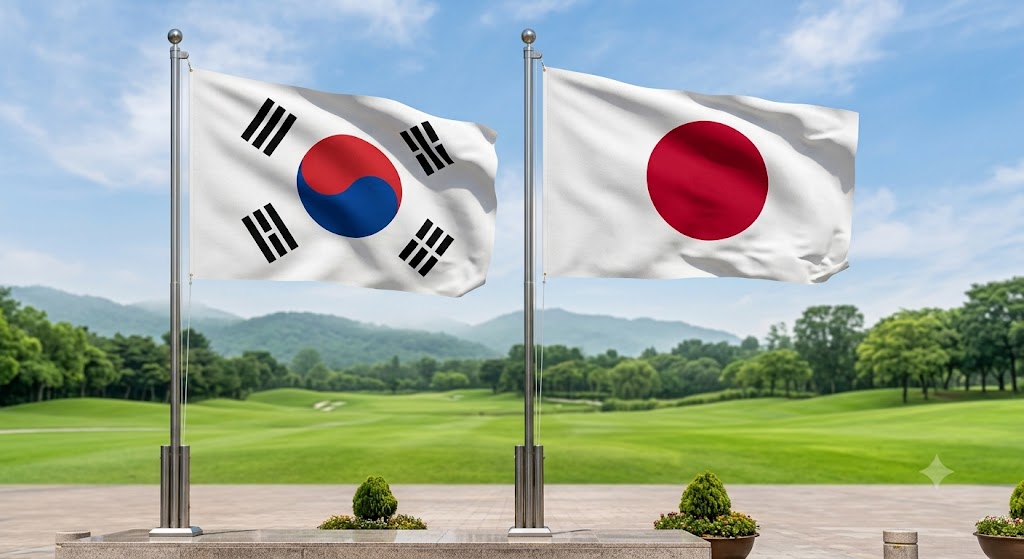
South Korea and Japan have reinforced their shared goal of achieving a denuclearized Korean Peninsula, committing to enhance security cooperation in the face of rising regional tensions. In a recent meeting in Seoul, South Korean Defense Minister Ahn Gyu-back and his Japanese counterpart, Shinjiro Koizumi, emphasized the importance of working collaboratively to support peace and stability in the region. They expressed their intention to strengthen bilateral ties and work closely with the United States to ensure regional security.
During the talks, the defense ministers agreed to renew joint search-and-rescue exercises and to bolster military exchanges, notably through collaborations between their air forces’ aerobatic teams. This move is seen as a significant step toward improving defense relations between the two nations, which have been strained over historical disagreements. The efforts to mend ties reflect a broader push to deepen security cooperation, particularly in response to North Korea’s ongoing nuclear developments and its increasing military alignment with Russia.
Both South Korea and Japan have been actively exploring avenues for strategic collaboration, extending beyond traditional military exercises to include fields like artificial intelligence and unmanned systems. These discussions underscore a mutual understanding of the evolving security landscape in the region and the need for a united front to address potential threats.
Despite these advancements, historical issues continue to cast a shadow over the relationship between the two countries. The legacy of Japan’s colonial rule over the Korean Peninsula continues to fuel disputes, particularly over wartime grievances and territorial claims. Nevertheless, both governments remain committed to maintaining open dialogue and pursuing avenues that could lead to improved strategic cooperation.