
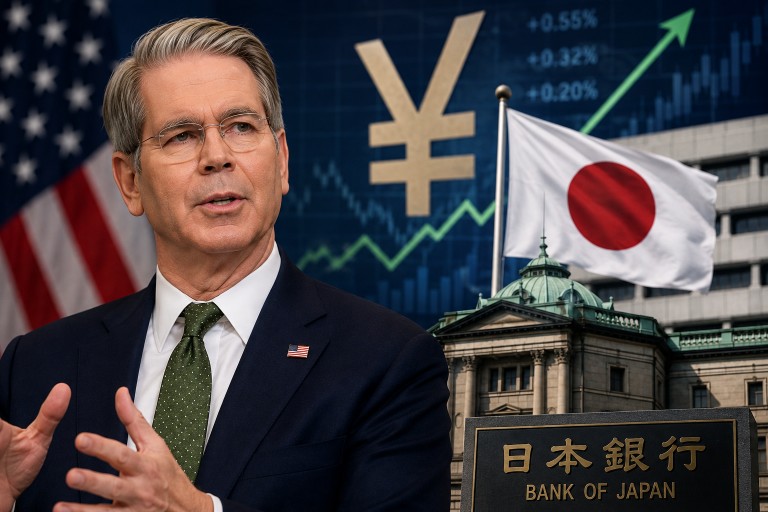
During discussions at the G20 finance ministers and central bank governors’ meeting in Asheville, North Carolina, U.S. Treasury Secretary Scott Bessent strongly backed Japan’s initiatives to bolster the yen. These comments have fueled market speculation that the Bank of Japan (BOJ) might raise interest rates during their policy meeting scheduled for September 17-18. Bessent, after meeting with BOJ Governor Kazuo Ueda, pointed out that the weakening yen was adding to inflationary pressures. He emphasized the critical role of sound monetary policy and clear communication in stabilizing inflation expectations and mitigating excessive currency volatility.
Anticipation of another rate hike by the BOJ has been growing in the market, especially after the central bank’s previous increase in June. Should the BOJ proceed with a rate hike in September, it could reinforce the perception that the bank is shifting towards a more aggressive monetary tightening strategy. This potential move comes as Japan grapples with rising borrowing costs, with the benchmark 10-year government bond yield recently exceeding 3% for the first time since 1996, a reflection of anticipated tighter monetary policy and concerns regarding the country’s fiscal health.
The increase in yields is not without consequence, as it raises the government’s debt-servicing obligations. Projections from the Finance Ministry suggest that if borrowing costs continue to climb, the interest payments on national debt could soar in the forthcoming years. This presents a significant challenge as the government tries to manage its fiscal responsibilities while maintaining economic stability.
Japanese households are also feeling the impact of rising interest rates, particularly those with fixed-rate mortgages, who are now facing higher repayment costs. Conversely, the higher rates are somewhat beneficial to savers and financial institutions, as they offer improved returns on deposits and long-term investments. This creates a complex situation for the BOJ, which must carefully weigh its options to support the yen and curb inflation without overburdening households, businesses, and government finances.