
Japan is expressing concern over potential delays in its next-generation fighter jet program due to possible German involvement. The Global Combat Air Programme (GCAP), a collaboration between Japan, Britain, and Italy, aims to develop an advanced fighter jet by 2035. However, Tokyo fears that Germany’s participation could disrupt the existing timeline and necessitate renegotiations of the agreed-upon responsibilities among the partner countries.
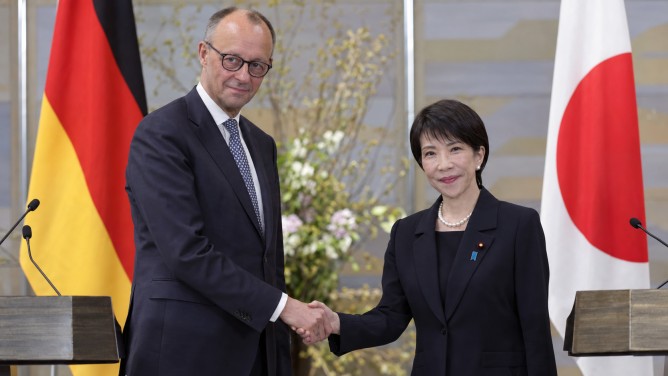
The interest from Germany was highlighted during a meeting between German Chancellor Friedrich Merz and Japanese Prime Minister Sanae Takaichi in Tokyo on October 28. Chancellor Merz suggested that both nations could explore cooperative opportunities in fighter aircraft development. This proposal, while potentially beneficial in sharing costs and expanding orders, raises concerns for Japan about the project’s continuity and efficiency.
A source from the Japanese Defence Ministry indicated that Germany’s entry could lead to alterations in the work-sharing arrangements, which have already been established between Japan, Britain, and Italy. Despite these concerns, Britain seems open to the idea of German involvement, primarily to alleviate development expenses and lower the unit price by widening the aircraft’s market.
As part of the deliberations, Japan plans to engage in discussions with Britain and Italy to assess the extent of Germany’s potential cooperation. One possibility under consideration is allowing Germany to participate as an observer. This arrangement would enable Germany to share information and potentially purchase the aircraft without directly impacting the program’s schedule.
Ultimately, while Germany’s involvement could bring financial benefits, Japan remains cautious about the implications for the project’s timeline and existing agreements. The outcome of these discussions will be crucial in determining whether Germany will play a role in the GCAP and, if so, in what capacity.