
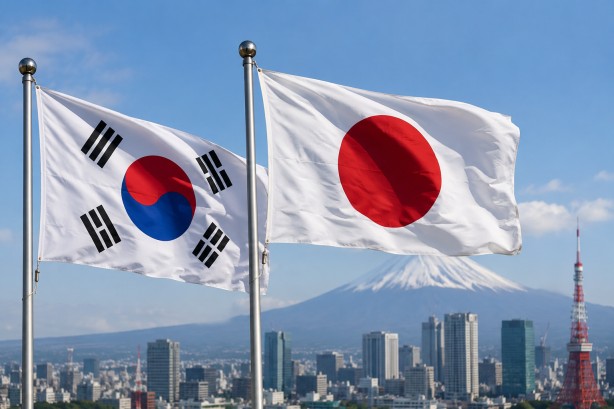
Under the leadership of Prime Minister Sanae Takaichi, Japan is moving in a more conservative political direction, posing new challenges for its relationship with South Korea. This shift raises concerns that ongoing historical and territorial disputes might jeopardize the diplomatic cooperation recently forged between the two nations. Traditionally, South Korea and Japan have maintained a “two-track” strategy, keeping contentious historical issues separate from areas requiring closer collaboration, such as security and economic relations. However, a recent report by South Korea’s Institute for National Security Strategy warns that Japan’s growing rightward political movement could destabilize their diplomatic progress.
Tensions have flared anew following visits by Japanese politicians to the controversial Yasukuni Shrine, along with Japan’s renewed territorial claims over Dokdo. This territory, controlled by South Korea, is referred to as Takeshima by Japan. Although Takaichi refrained from visiting the shrine on August 15, the anniversary of Japan’s World War II surrender, she did send a symbolic ritual offering. This gesture, along with visits from several senior Japanese officials to the shrine, has triggered official protests from South Korea.
South Korean President Lee Jae Myung has responded with a balanced approach, recognizing historical grievances while stressing the necessity of continued cooperation with Japan. His administration is focused on maintaining and expanding bilateral cooperation, despite the challenges posed by historical and territorial disputes. Experts caution that without tangible progress on these issues, the “two-track” strategy could be undermined.
Historical disputes, territorial disagreements, and controversies related to wartime actions remain significant hurdles. Both nations must navigate these sensitive topics to ensure the continuation of diplomatic relations. Observers emphasize the importance of expanding practical cooperation while simultaneously addressing historical grievances, to prevent these disputes from overshadowing shared interests in security and economic collaboration.
As Japan’s political landscape evolves, experts are closely monitoring how these changes will impact its foreign policy, particularly its relations with South Korea. There is a pressing need for both countries to find common ground, allowing them to move past historical tensions and strengthen ties in other critical areas. The ability of Japan and South Korea to manage these intricate dynamics will be crucial in determining the future direction of their bilateral relations.